


“Sleepy” tourism: what is it and why is it becoming a global trend
In recent years, people are increasingly looking for not just a vacation, but a targeted restoration of internal balance and quality sleep. This demand has given rise to a new, fast-growing segment in the travel industry - sleep tourism. Its main mission is to help guests finally get enough sleep, reboot the nervous system and improve their physical and emotional well-being.
What is “sleepy” tourism and how did it appear?
“Sleep tourism” is a specialized area of recreation, where all the infrastructure, programs and services of the hotel are aimed at optimizing and improving the quality of sleep of the guest. Unlike active adventures or beach holidays, here the main emphasis is on privacy, silence, absolute comfort and an atmosphere of complete tranquility.
The trend began in response to the global problem of sleep deprivation. Constant employment, information noise, stress and ubiquitous gadgets have led to the fact that, according to VTsIOM, more than 60% of Russians regularly face sleep problems. Against this backdrop, the demand for relaxation, which helps to “reboot” the body and restore healthy biorhythms, has grown manifold, turning sleep into a key element of luxury.
What is the difference between sleep-oriented rest?
Sleep tourism focuses on a slow pace and an integrated approach. The rooms and programs in these places are not just a place to sleep, but a carefully designed sleeping environment.
Key Features:
- Sleeping environment: Soundproofed, darkened rooms equipped with blackout systems.
- Technology and comfort: Ergonomic and even smart beds, orthopedic mattresses, pillow menu and natural linen made from hypoallergenic fabrics.
- Aroma and Light Therapy: Use of essential oils (lavender, sandalwood, chamomile), as well as special soft lighting systems that exclude the blue spectrum, which suppresses the production of melatonin.
- Personalized programs: Cooperation with somnologists and psychologists. Guests may be offered consultations, personalized sleep analysis using wearable technology and a biorhythm recovery plan.
- Digital Detox: Programs that encourage people to give up gadgets, or special safes for storing phones to eliminate their influence on the evening ritual.
- Natural factor: Fresh air, silence and natural sounds (the sound of leaves, rain) are like natural sleep aids.
Why is the trend gaining popularity in big cities?
Modern man lives in a state of chronic information and light pollution. The constant flow of news, work chats and social networks causes fatigue, anxiety and decreased concentration.
That is why there is an urgent need to go to a place where you can “cut off the oxygen” to the information noise and allow yourself to just sleep, walk and be silent.
This format is especially in demand among residents of large cities - Moscow, St. Petersburg, Novosibirsk, Yekaterinburg, where life proceeds at the most accelerated and stressful pace. Tourists actively choose country eco-hotels and retreat centers, where recovery occurs naturally - through nature and healthy sleep.
What does a day in the style of “sleepy” tourism look like?
The schedule on such a trip is deliberately built around sleep and deep relaxation. No rush is the main rule.
A typical day might include:
- Slow start: Slow brunch and leisurely walks in nature.
- Evening rituals: Warm baths with magnesium salt, spa treatments, gentle massages and aromatherapy before bed.
- Healthy eating: Light, natural dishes (often from farms) that do not overload the digestion. The menu may include special sleeping pills and herbal teas.
- Relaxation practices: Meditation, breathing exercises, yoga nidra, stretching or qigong classes in quiet relaxation areas (libraries, hammocks).
The main principle: no alarm clocks, urgent calls or deadlines. Only peace and quiet.
Where to try a “sleepy” holiday
More and more Russian hotels and country complexes are including elements of “sleepy” tourism in their programs. These could be special “sleep” packages, pillow menus or evening rituals.
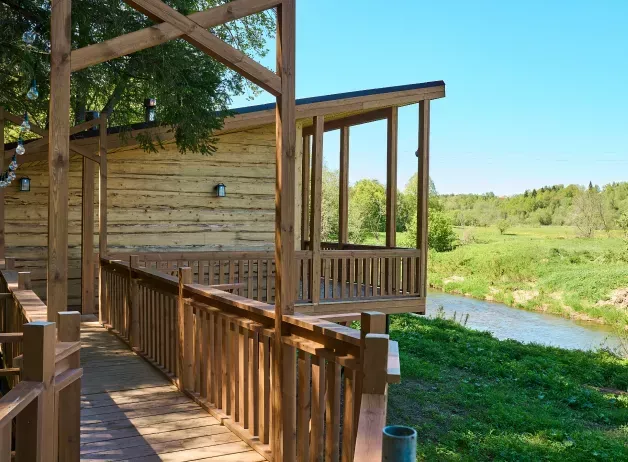
Ecorancho (a cozy country eco-hotel near Moscow) is a striking example illustrating this approach. Here, all the conditions are created so that guests can disconnect from the hustle and bustle and restore healthy sleep:
- Silence and nature: Location away from the city and information noise.
- Wellness: Relaxation in the spa area, aromatherapy massages and Russian bath.
- Nutrition: Farm food made from fresh, local ingredients to promote ease.
Ecorancho, like other similar places in different regions of Russia, offers guests the opportunity to truly “turn off” their heads and return to natural rhythms.
Good sleep is not a luxury, but a key foundation for health. If previously vacation was associated exclusively with active travel and new experiences, now more and more people choose silence, comfort, and, most importantly, a healthy sleep under the rustle of leaves.
- “Sleepy” tourism: what is it and why is it becoming a global trend
- What is “sleepy” tourism and how did it appear?
- What is the difference between sleep-oriented rest?
- Why is the trend gaining popularity in big cities?
- What does a day in the style of “sleepy” tourism look like?
- Where to try a “sleepy” holiday
Interesting articles

Barbecue in nature near the forest: how to organize gatherings with a group

Yoga and meditation in nature: a new format for healthy recreation

What is “slow tourism” and why is it gaining popularity in Russia
Contrast procedures: how to correctly alternate heat and cold in a Russian bath


What's the difference between farm cheese and store-bought cheese: 7 things you'll notice right away

Wedding anniversary in nature: how to turn an important date into a real trip for two

How family vacations change the relationship between parents and children

Agritourism for children: how holidays on a farm help development, health and family vacation

Work at Ecorancho: how to work productively and truly relax

Fishing in the Moscow region for the weekend: trophies, silence and comfort at Ecorancho

Winter quad biking in the Moscow region: drive, nature and new experiences

Winter fishing: a complete guide for beginners and those who want to fish comfortably

Holidays with children under 3 years old outside the city: what to take and where to stay

What is ecotourism: pros and cons, how to distinguish it from ordinary recreation

Fishing for beginners: Where to start to catch your first trophy
Ecorancho is your trophy start.
What to take with you to the recreation center
Let your holiday in Ecorancho go well - you will be sure that nothing is forgotten!
Country holidays in winter: what to do besides skiing
Winter in the Moscow region is an excellent reason to get out of the city and discover new forms of recreation.

The art of the Russian bath: how to steam properly for health and pleasure

A romantic margin of marriage and heart in nature: how to create the perfect moment

How to choose a country hotel in the suburbs for a trip with grandparents

Family weekend in the suburbs: how to occupy children and adults

Why is it worth celebrating a holiday in nature in the Moscow Region

Organization of a children's birthday in nature: ideas and tips from Ecorancho

Fishing in the suburbs in the summer: trophy maple in Ecorancho

Gastronomic tourism outside the city: farms, restaurants and tastings


In search of peace: fishing on eco -rancho - art art in nature


Active vacation outside the city: tracking, bicycle routes and horseback riding
Advantages of eco-tourism for health and ecology
Ecotourism is not just a fashion trend, but a conscious choice in favor of harmony with nature.

The best tips for organizing a picnic in nature
The organization of a picnic in nature requires careful preparation and attention to details

How to choose a suitable place to relax outside
A suburban vacation allows you to restore strength naturally.

History of cheese reasons: how the culture of cheese around the world has developed
Over the millennia, this amazing product has gone from a simple way to preserve milk to an exquisite delicacy.

Why is it important to introduce children to farm animals: education and development
Communication with farm animals opens up new opportunities for children, contributing to their harmonious development and the formation of important life skills.

The importance of farm products in modern cuisine
In recent years, interest in farm products has shown steady growth.

Benefits of winter holidays with fishing and sauna for the New Year
Celebrating the New Year in nature creates a special holiday atmosphere.
Corporate retreat in nature in the Moscow region
Eco-hotel Ecorancho offers excellent conditions for a successful Corporate Retreat in the Moscow region.
Glamping with a pool: a new format for a comfortable holiday in the Moscow region
Don't put off your perfect vacation until later. Ecoranch is waiting for you to give you an unforgettable experience and help you recharge away from the bustle of the city.

New Year's holiday in the Moscow region: how to spend the holidays in an eco-hotel?
For those who want to spend the New Year holidays away from the bustle of the city, but at the same time not deprive themselves of comfort, a holiday in an eco-hotel in the Moscow region will be the ideal solution.
Fishing with accommodation in the Moscow region: the perfect combination of relaxation and pleasure
Fishing in the Moscow region is becoming increasingly popular among residents of large cities looking for solitude and tranquility in nature.

Holidays with children outside the city on the weekend: how to spend time usefully
Modern life is often full of stress, bustle and constant rush. All this does not have the best effect on both adults and children.

Magazine "Modern Health": Place of Power
Everyone knows perfectly well how importantfor humans contact with nature.Well, it's time to do it on your ownexperience to find out howThis is an effective method! "It's a sad time,charm of the eyes..." - wrote about autumnPushkin. We only partially agreewith the Poet. Yes, of course, my eyescharm. But under no circumstancesnot a sad time! After all, in natureyou can find so many in any seasonexciting and usefulclasses! Dedicated to this very topicreport from the Good Morning programFirst Channel of Russian TV.Iwe are very pleased,that television journalistschose our Ecorancho asmain location for filming.And this choice was not accidental:Here you can also fish,and ride a horse,and chat with the camel,and taste farmer's cheeses.


